

 Search
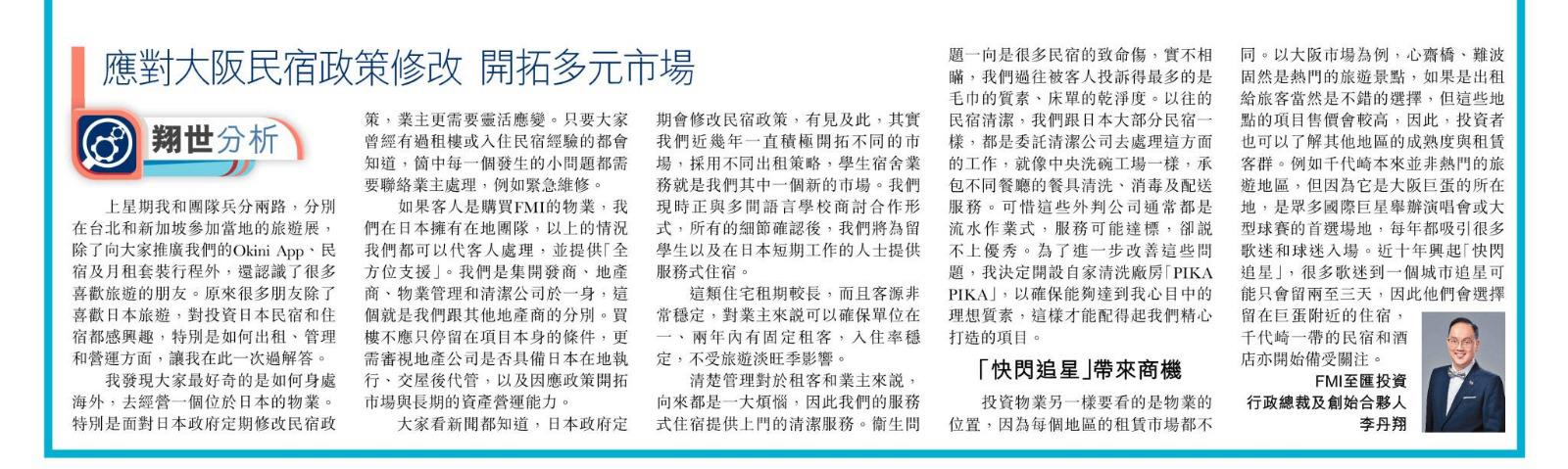
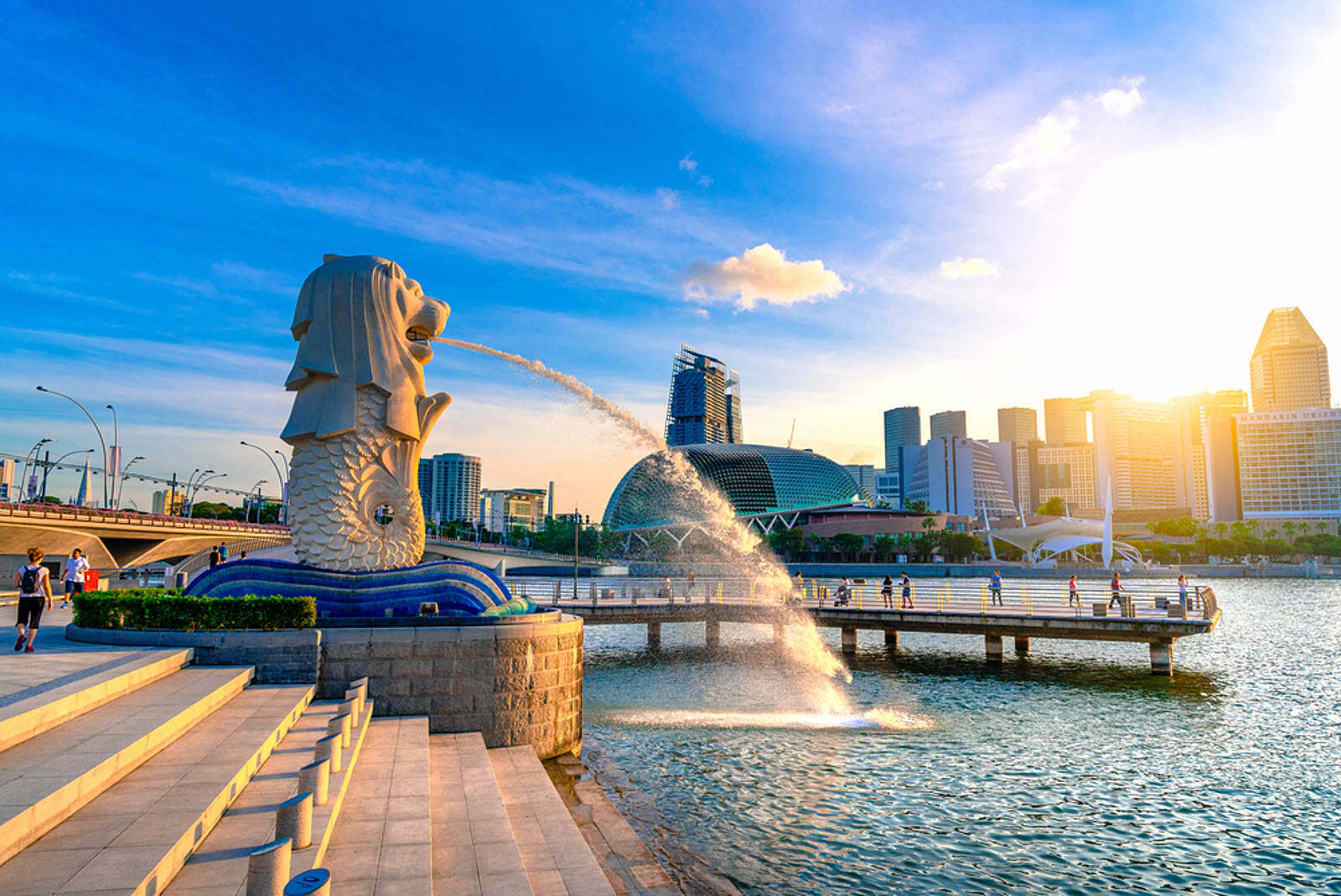
Last week, my team and I split into two groups to participate in local travel exhibitions in Taipei and Singapore. Alongside promoting our Okini App, minshuku (private lodgings), and monthly rental package tours, we met many travel enthusiasts. It turns out that besides loving travel in Japan, many friends are also interested in investing in Japanese minshuku and accommodations—particularly regarding how they are rented out, managed, and operated. Allow me to answer all these questions at once.
I found that what everyone is most curious about is how to manage a property located in Japan while being overseas. Especially with the Japanese government regularly revising its minshuku policies, owners need to be flexible and adaptable. Anyone who has ever rented out a property or stayed in a minshuku knows that every little issue that arises requires contacting the owner, such as emergency repairs, key or check-in problems, delayed check-outs, and so on.
If guests purchase a property through FMI, we have an on-ground team in Japan to handle these situations on behalf of our clients, providing "all-round support." We integrate the roles of developer, real estate agency, property management, and cleaning company all in one—this is what sets us apart from other real estate developers. Buying a property should not stop at the condition of the project itself; investors also need to examine whether the real estate company possesses on-the-ground execution capabilities in Japan, post-handover management, and the ability to expand markets and manage long-term assets in response to policy changes.
Diversified Rental Strategies
As everyone sees in the news, the Japanese government regularly revises its minshuku policies. In light of this, we have been actively exploring different markets and adopting various rental strategies over the past few years, with the student housing business being one of our new ventures. We are currently discussing cooperation formats with multiple language schools. Once all details are finalized, we will provide serviced accommodations for international students and short-term workers in Japan. These types of residences feature longer lease terms and a very stable source of tenants, ensuring owners have fixed occupants for one to two years, resulting in steady occupancy rates unaffected by peak and off-peak tourism seasons. Clear management has always been a major headache for both tenants and landlords.
Therefore, our serviced accommodations provide on-site cleaning services. Hygiene has always been the Achilles' heel of many minshuku. To be frank, what we received the most complaints about from guests in the past was the quality of the towels and the cleanliness of the bed sheets. Previously, for minshuku cleaning, we—like most minshuku in Japan—delegated this work to cleaning companies, much like a central dishwashing factory that contracts out the washing, sterilization, and delivery of tableware for different restaurants. Unfortunately, these outsourced companies usually operate on an assembly-line basis; their service might meet basic standards, but it can hardly be called excellent. To further improve these issues, I decided to open our own in-house cleaning facility, "PIKA PIKA," to ensure we achieve the ideal quality I envision, making it worthy of the meticulously crafted projects we build.
From buying land and constructing buildings through "FMI Japan," to property and minshuku management by "Global Managing Director," and subsequent cleaning management services by "PIKA PIKA," everything is handled by companies under our group. If any issue occurs, the relevant person-in-charge can be reached for immediate resolution. A truly reliable real estate company is not one that only provides information before a transaction, but one that can continue to undertake management and operation after handover—this is FMI's advantage.
Osaka Dome "Flash Celebrity Chasing" Business Opportunities
Another aspect to consider when investing in property is its location, as the rental market differs across regions. Taking the Osaka market as an example, Shinsaibashi and Namba are certainly popular tourist spots, and they are undoubtedly good choices if renting out to tourists. However, property prices in these locations are relatively high, so investors can also look into the maturity and rental demographics of other areas. For instance, Chiyozaki was not traditionally a popular tourist area, but because it is the home of the Osaka Dome, it is the preferred venue for international superstars holding concerts or major sporting events, attracting crowds of fans and sports enthusiasts every year. With the rise of "flash celebrity chasing" over the past decade, fans traveling to a city to follow their idols often stay for only two to three days, leading them to choose accommodations near the dome. Minshuku and hotels around the Chiyozaki area have also begun to attract significant attention.
"The Peak Chiyozaki Waterfront" in Chiyozaki currently has full river-view units available for sale. In addition to being close to the Osaka Dome, it is also near Aeon Mall Osaka Dome City, a shopping mall that satisfies all the needs of flash celebrity chasers. Furthermore, it is right next to a major Osaka transportation hub—Taisho Station. From Taisho Station, passengers can take the Nankai-Kansai Airport Rapid Service straight to Kansai International Airport without transferring, or easily connect across Osaka's core districts via the JR Osaka Loop Line.